

In the early days of the internet, search engines were the great equalizer. A humble blog post from an expert in a niche field could outrank a corporate site simply by being better, clearer, and more helpful. Search engines acted as the conduit — connecting people to creators, not just answers. But that’s changing. And not for the better.
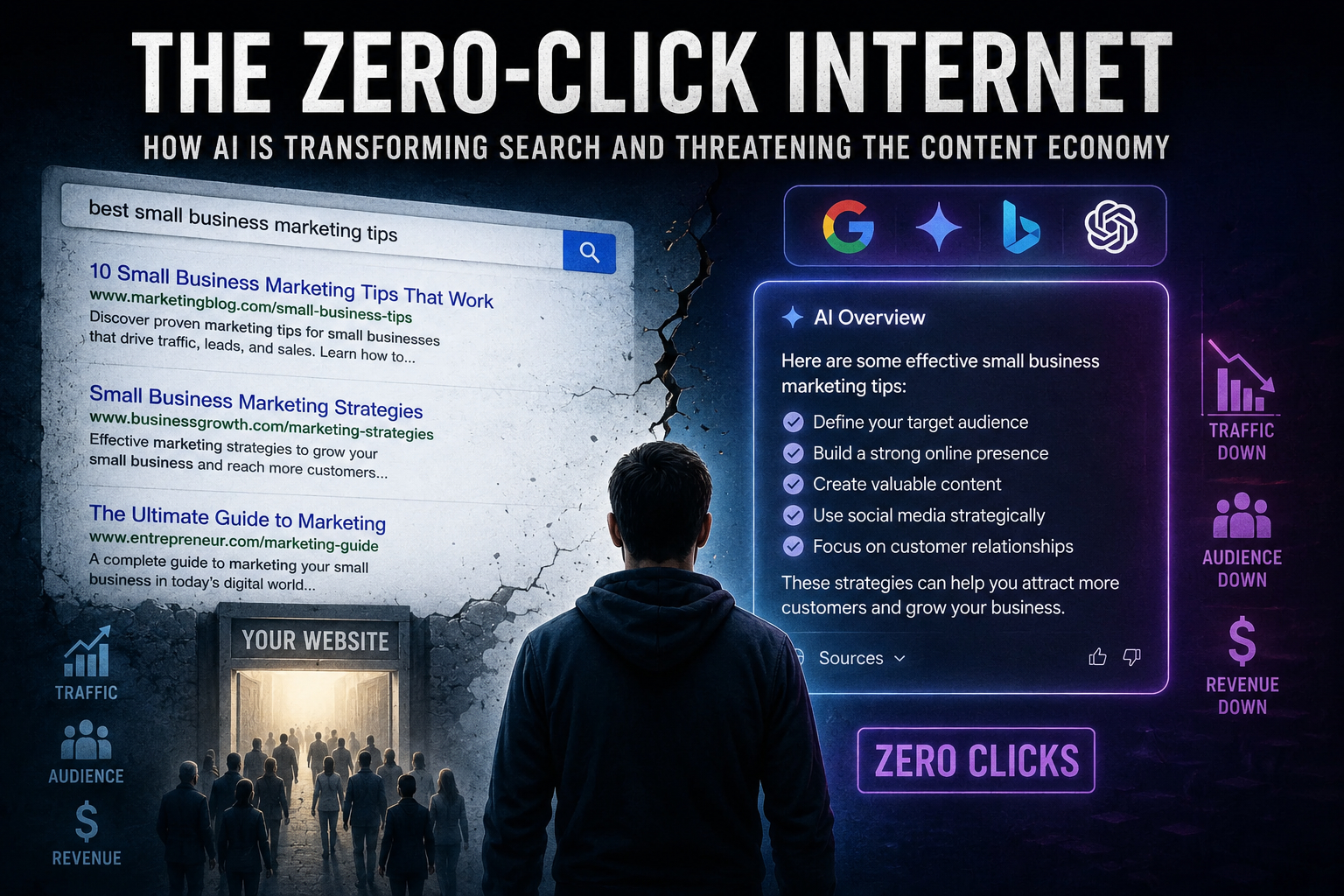
We’re now deep into the era of the zero-click internet — a trend that redefines how people interact with the web. It’s a world where search engines answer your question before you even click a link. On the surface, that sounds great. Who wouldn’t want faster answers? But dig a little deeper, and you’ll see how this model is fundamentally eroding the web as we know it.
What Zero-Click Actually Means
A zero-click search happens when a user finds what they need without ever leaving the search engine results page. Instead of visiting a site, they get a snippet, a quick fact, or a card with all the details already displayed. Google, Bing, and other engines increasingly surface these micro-answers through featured snippets, knowledge panels, local maps, and more.
The problem? These answers are scraped — sometimes legally, sometimes dubiously — from the very creators who built the content ecosystem to begin with.
Convenience vs. Connection
As developers, we love optimization. Efficiency is a virtue. But convenience in the zero-click world comes at a high cost: disconnection. Users are no longer discovering new sites, following thought leaders, or reading full articles. They’re engaging with shallow summaries, not rich content. They’re reading fragments of someone’s work, without attribution, context, or the opportunity to dive deeper.
This isn’t just a shift in user behavior — it’s a shift in incentives. Why should a developer, writer, or small business owner invest hours (or years) into creating in-depth content if it’s going to be stripped down into a one-sentence summary and attributed to nobody?
The Devaluation of Expertise
The zero-click model promotes consolidation over accuracy. A page ranked at the top of results often reflects the most optimized content, not the most correct. Worse, the information is often cobbled together from a blend of outdated posts, scraped data, and speculative content, leaving users with an answer that’s fast — but flawed.
When authority is measured by algorithmic convenience rather than domain expertise, we lose the voices that used to matter. Doctors, engineers, coders, historians — they’re being buried under AI-written summaries and SEO-churned fluff.
A Web Without Clicks Is a Web Without Creators
Here’s the hard truth: Users are no longer engaging with creators. They’re engaging with summaries.
Search results now favor consolidated blurbs of recycled content, some of which is outdated, misattributed, or outright incorrect — yet it sits at the top of the results, seemingly endorsed by the search engine itself. The irony? These summaries are stitched together from the very blogs, forums, and publications that used to be the backbone of web knowledge.
The zero-click future is one where creators — developers, writers, thinkers — get neither traffic, credit, nor compensation for their work. Their content becomes invisible, and worse, unnecessary in the eyes of the algorithm.
What Now?
As web developers and digital creators, we must rethink our strategies. That means embracing channels we can control: newsletters, communities, private search, subscriptions. But it also means raising awareness of what we’re losing.
Because if we continue down this path, the internet won’t be a place of exploration, connection, or creativity. It’ll be a vending machine of second-hand knowledge — efficient, predictable, and dangerously bland.
Let’s not allow convenience to become the enemy of truth.
This article was reviewed and refined with the assistance of AI tools to help ensure clarity, structure, and grammatical accuracy. All ideas and opinions remain solely those of the author.
Related Posts